
Epson supports new National Manufacturing Strategy for Fashion and Textiles
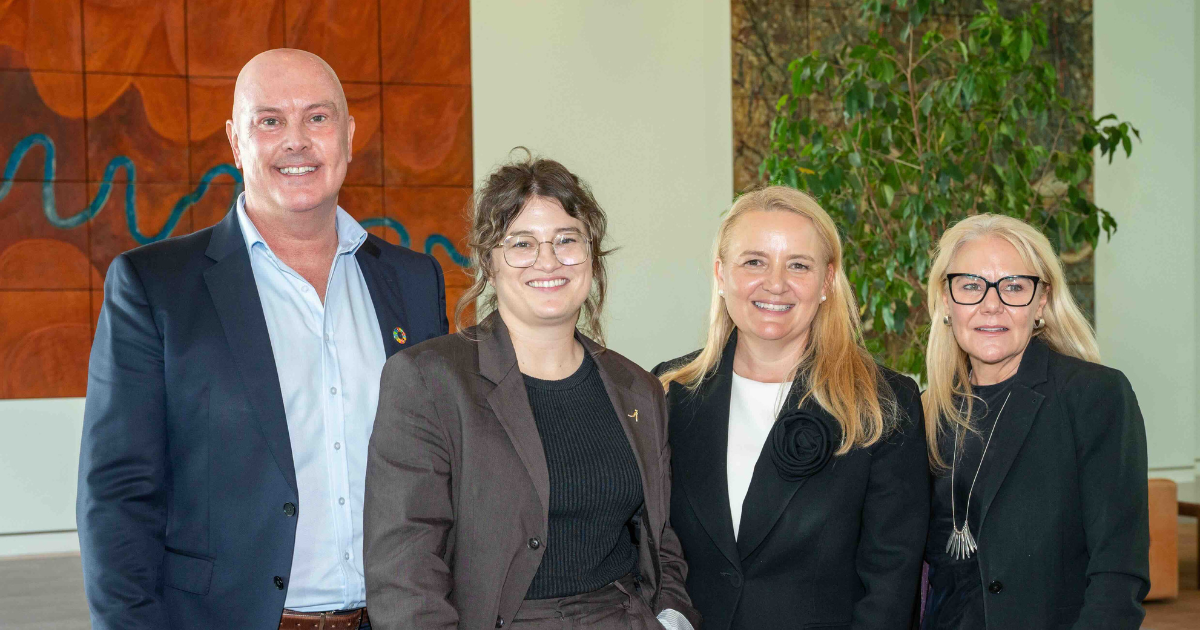
The Australian Fashion Council (AFC) and R.M.Williams have launched the National Manufacturing Strategy for Australian Fashion and Textiles 2026 – 2036 at Parliament House in Canberra – the first coordinated national roadmap to rebuild targeted domestic manufacturing capability across Australia’s textile, clothing and footwear (TCF) sector.
As the official print and projection partner of the Australian Fashion Council, Epson are fully supporting this national manufacturing strategy, its strategic outcomes and strategic pillars, as detailed below, that firmly promote Australia’s onshore manufacturing capabilities.
Craig Heckenberg, Managing Director, Epson Australia, says, “Epson is firmly committed to our partnership with the Australian Fashion Council and our joint goals around improving local manufacturing, furthering innovation and developing digital transformation. To that end, Epson are also working closely with the AFC on a feasibility study for a ‘smart factory’ and shared manufacturing hubs similar to those we have already developed and implemented with The Social Outfit and Citizen Wolf, where Epson’s direct-to-fabric digital printing technologies play a part in the overall production workflow. This National Manufacturing Strategy represents an important step forward for Australia’s fashion and textile industry. Epson is proud to support this initiative and help accelerate the adoption of advanced digital technologies that can drive greater sustainability, unlock new opportunities, and create the jobs of the future.”
The ten-year Strategy is the result of almost a year of industry consultation led by the AFC and R.M.Williams, including 14 national consultations with manufacturers, brands, educators and policymakers across the country. More than 300 stakeholders contributed to the process, generating over 1,000 proposed initiatives and nearly 900 votes on strategic priorities to shape the sector’s long-term manufacturing future.
“This Strategy sets out a clear roadmap for rebuilding a globally competitive Australian fashion and textile manufacturing sector. Australia already has exceptional design talent, advanced manufacturing capability and globally recognised brands. With the right coordination across industry, skills and procurement policy, we have a real opportunity to strengthen sovereign capability, create skilled jobs and position Australia as a leader in premium manufacturing,” says Marianne Perkovic, Executive Chair, Australian Fashion Council
The Strategy was unveiled at a breakfast symposium and an AFC member showcase in Mural Hall, attended by over 90 industry and parliamentary guests, including members of the Parliamentary Friends of Australian Fashion & Textiles and its Co-Chairs, Matt Burnell MP, Dai Le MP and Zoe McKenzie MP.
Burnell says, “This Strategy is a serious economic blueprint for communities, supporting skilled jobs, strengthening regional manufacturing, and creating clearer pathways for women into trades and long-term manufacturing careers. It presents a coordinated, cross-portfolio agenda that connects procurement, skills and industry capability. As Co-Chair of the Parliamentary Friends group, I’m committed to supporting the sector to turn this plan into long-term coordinated action.”
The Strategy comes at a critical time for the industry. With 97 per cent of Australia’s clothing and textile products manufactured offshore, the sector remains vulnerable to ongoing global supply disruptions and trade volatility. Rather than compete against high-volume offshore manufacturing markets, the Strategy is focused on closing structural gaps and accelerating advanced manufacturing to scale the sector’s comparative advantage, aiming to position Australia to compete globally in premium, technology-enabled and traceable production, built on the country’s natural fibre strengths.
Samantha Delgos, General Manager, Australian Fashion Council, says, “Australia is the world’s largest exporter of greasy wool and a globally significant cotton producer. Yet we export raw fibre and import finished goods at multiples of the original value. Re-establishing fibre processing and spinning capability restores the missing link in our value chain. Building the next generation of capability to capture this value – capability that is advanced, technology-enabled and circular – will also require stronger demand signals. Strategic public procurement can help anchor that demand and support the growth of Australia’s domestic manufacturing capability.”
The Strategy outlines three strategic pillars underpinned by industry and government coordination as the levers required to deliver these outcomes by 2036. 1. Activate and drive demand 2. Secure the workforce of the future 3. Accelerate advanced manufacturing
AN ECONOMIC CASE FOR ACTION
Independent modelling by RMIT University suggests that full implementation of the Strategy’s coordinated policy platform will grow TCF manufacturing value added from $2.6 billion to $2.9 billion by 2030/31, delivering a cumulative $1.4 billion economic dividend over five years. The Strategy is also projected to create more than 1,000 new skilled jobs and $864 million in additional wages, with approximately half of those jobs projected to be filled by women.
At present, TCF manufacturing already employs more than 27,000 Australians – 58 per cent women (compared to 28 per cent in other manufacturing industries) and 41 per cent from culturally and linguistically diverse communities – and pays over $1.4 billion in wages annually. Strengthening this base will increase the competitiveness of Australia’s $28 billion fashion and textile industry, which employs nearly 500,000 Australians across the broader value chain.
The Strategy’s launch at Parliament House marked an important moment for Australia’s fashion and textile industry. To showcase the capability already operating in Australia, AFC members from across the manufacturing sector presented a cross-section of domestic production. The showcase featured R.M.Williams, Bianca Spender, Bond-Eye Australia, Clothing the Gaps, ABMT, Sylvia P, Waverley Mills, Silver Fleece and Stewart & Heaton.
“R.M.Williams has been manufactured in Adelaide for more than 90 years. We employ skilled craftspeople, invest in apprentices and continue to modernise production while competing globally. What’s needed now is to activate a flywheel: demand enables investment in skills, skills enable advanced manufacturing, and technology allows Australian manufacturers to scale while maintaining quality,” says Tara Moses, Chief Operating Officer, R.M.Williams
The AFC and R.M.Williams also produced a short film titled ‘Made Here, Worn Everywhere’ profiling AFC members, including Australian Defence Apparel, The Social Outfit, Maara Collective, Citizen Wolf, Waverley Mills and Silver Fleece, highlighting the diversity of manufacturing already taking place across Australia.